Weekly updates: Zoo sketches, acrylic, figure eight snake and Alexander horned deer

Hi everyone, so I’ll probably be posting my progress in learning how to draw and paint here every week, hope they are at least entertaining to look at~ =P

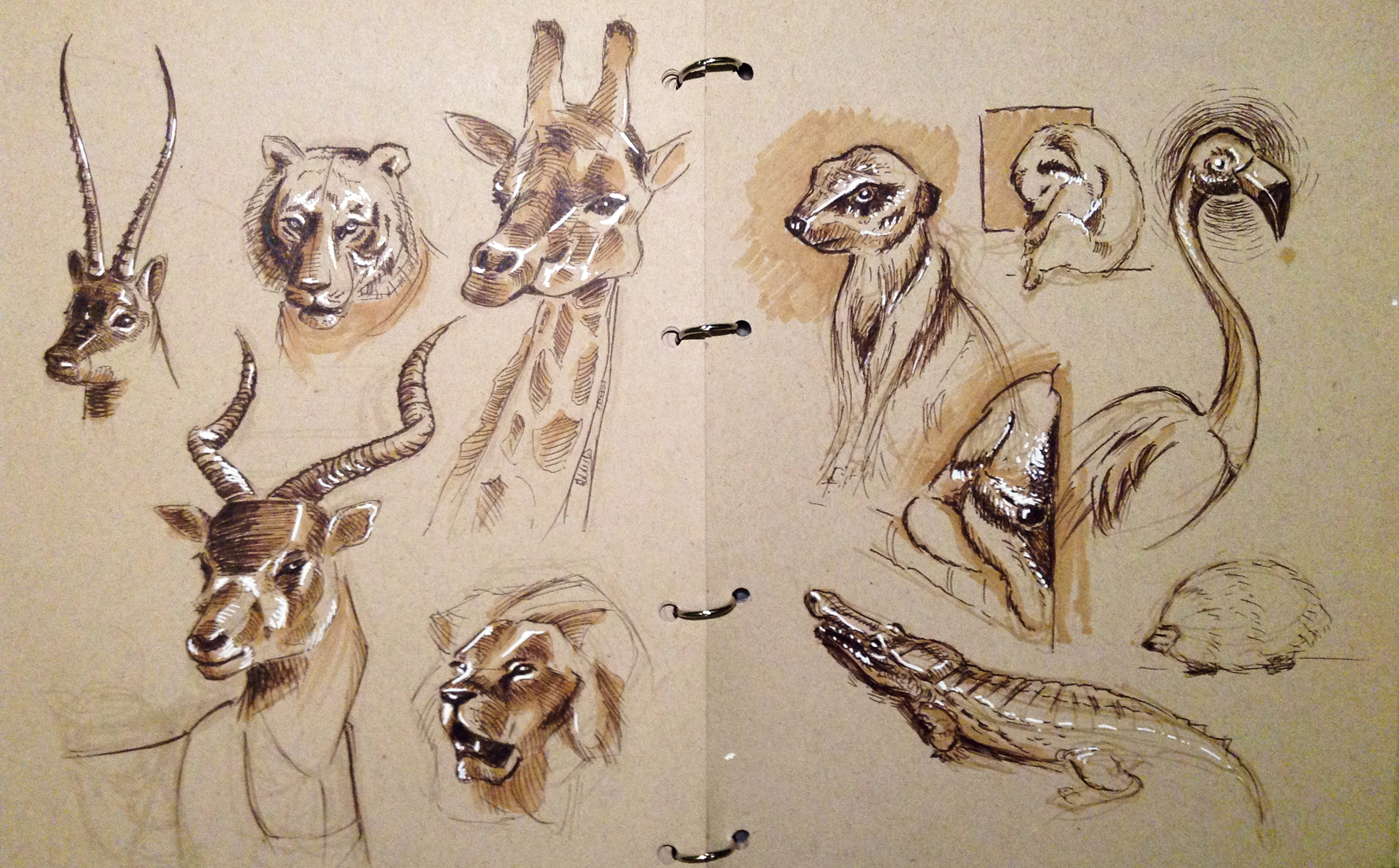
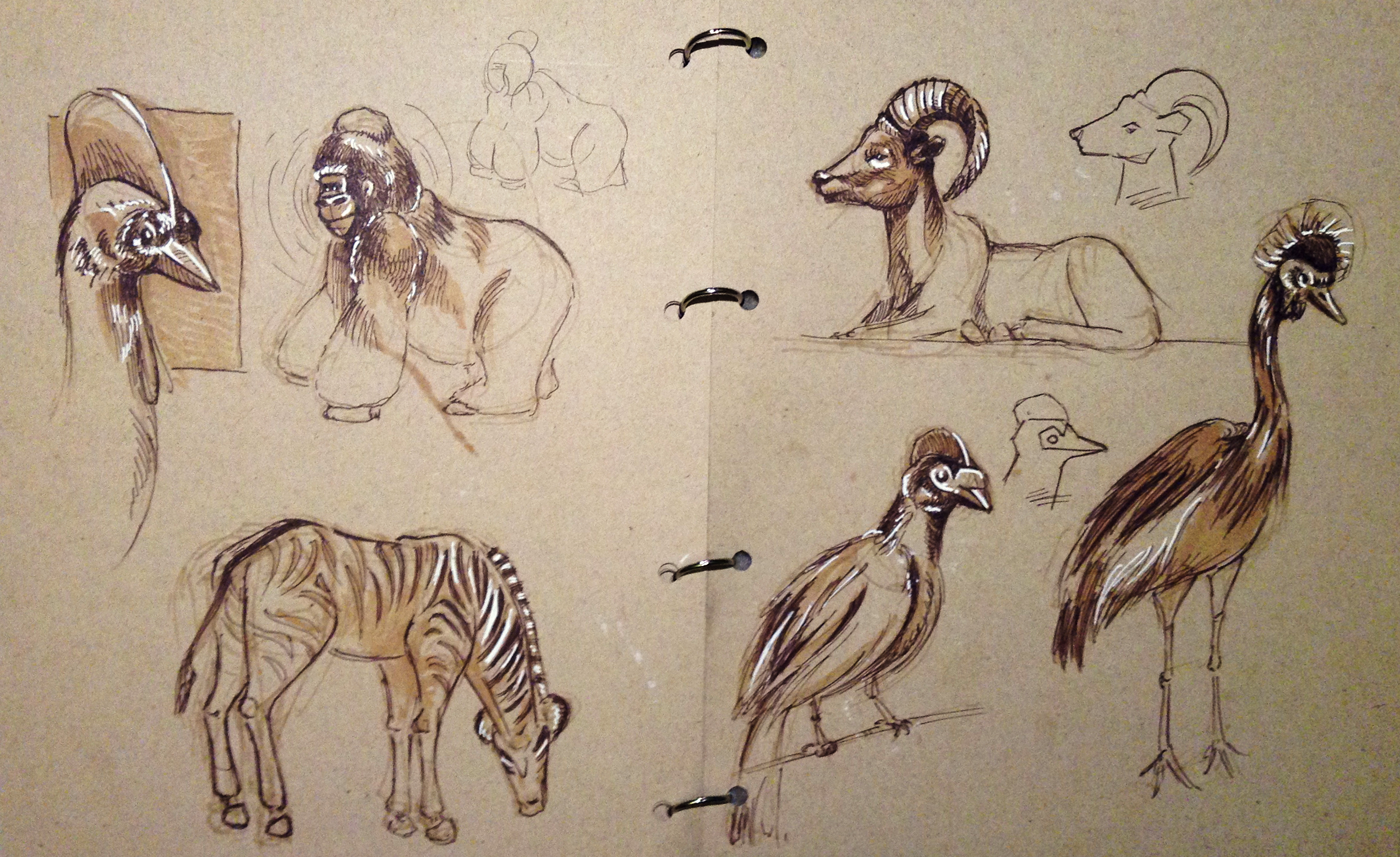
Some head study from photos, the rest I did live in the zoo~ (well…animals are moving, but I think I’m getting used to that ^^)

2013-07-20 23.40.39 copy


2013-07-20 23.41.11


I was not too happy with the rendering of animals, hence I started copying style from some cool people:

2 (3 of 5)


And just a reminder that tigers probably going to extinct soon~


2 (4 of 5)

Then we had to re-design animals as characters =P

2 (1 of 5)


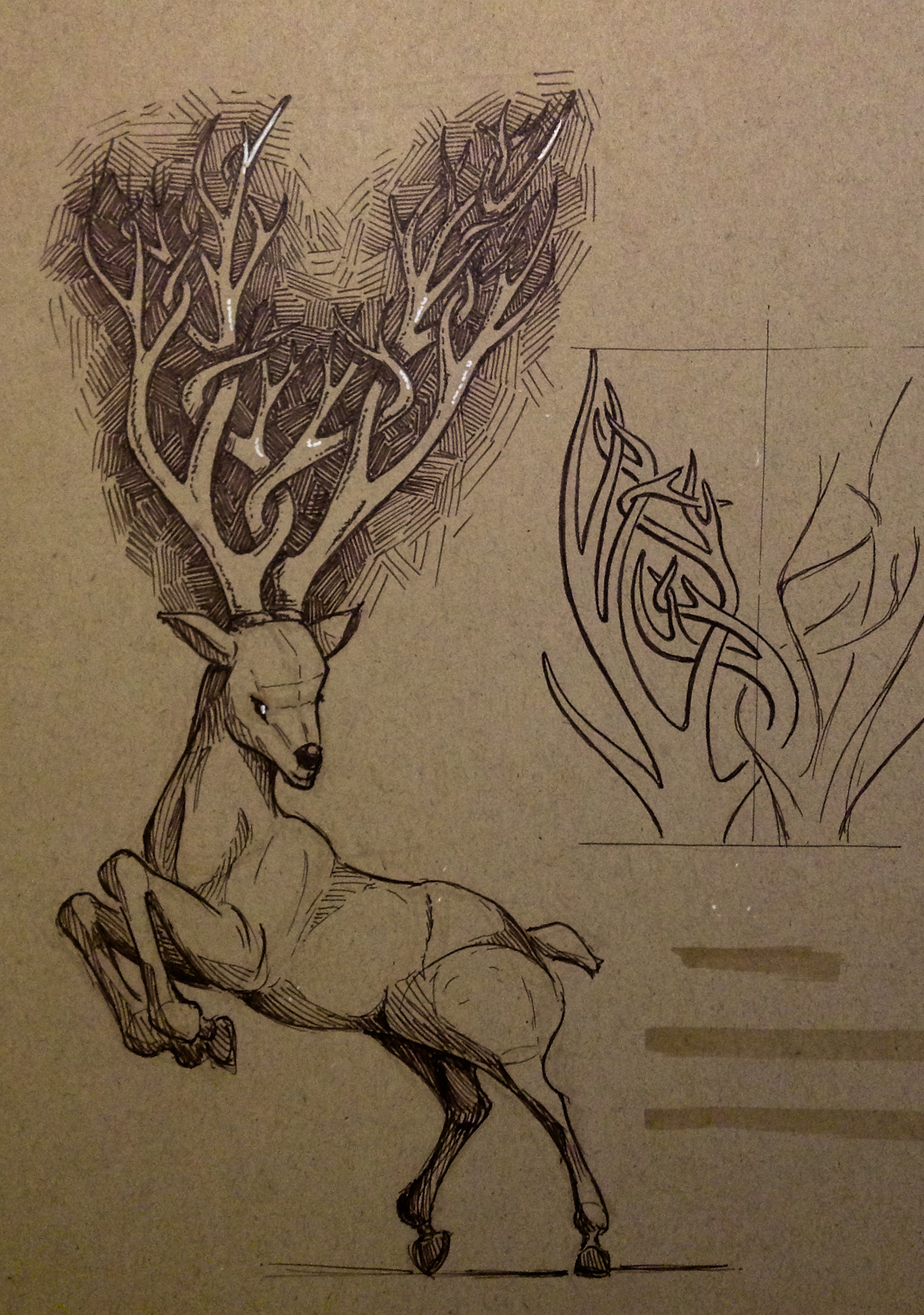
Real va Stylized. (Figure eight knot snake!)

2 (5 of 5)

Then I spent a whole lot of tome figuring out how to put the Alexander horned sphere as horns >.<

2 (2 of 5)


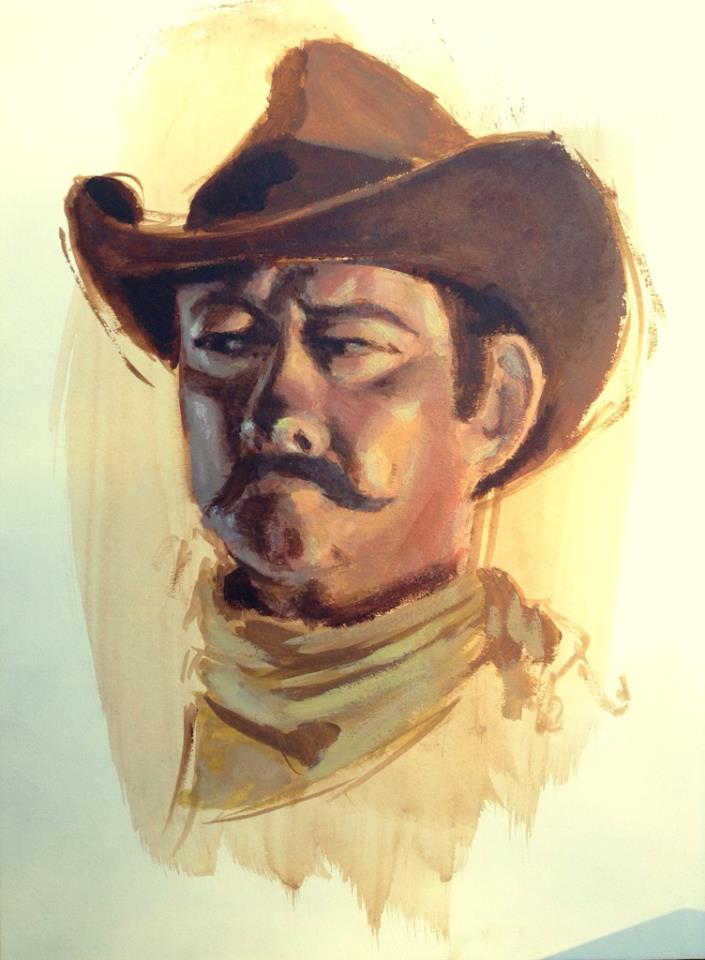
This week I tried using acrylic (for the first time besides that one i high school^^), it was FUN!


1012817_4912727989794_776464936_n


An oil again…I tried using less crazy colors to achieve a more classical feeing…doesn’t quite work yet >.<

2013-07-23 10.40.29


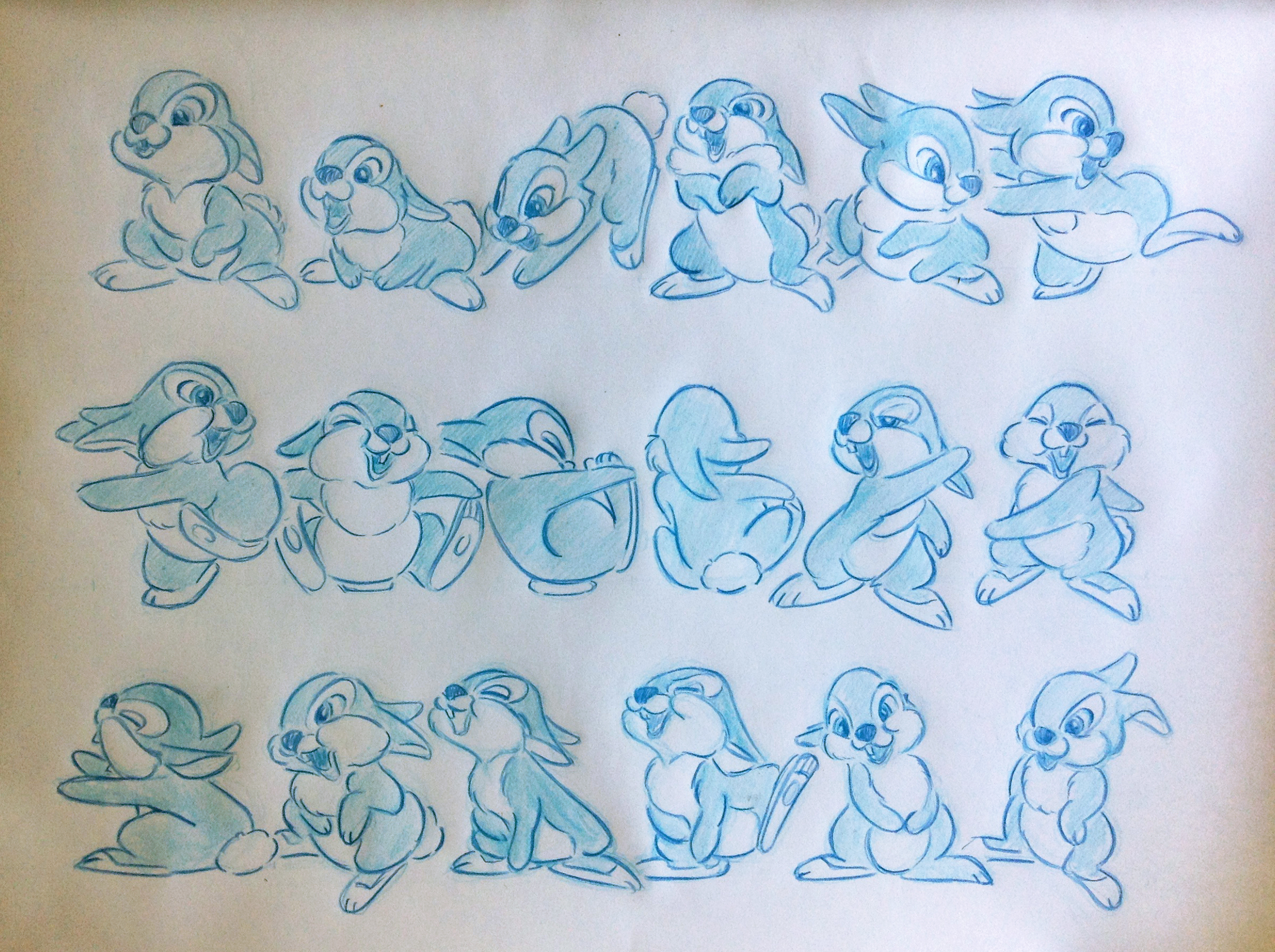
Reviewed Bambi for the first time since I was 5 years old! It was AMAZING…did thirty Thumpers~

2013-07-24 18.10.12


2013-07-23 15.57.35


Back to the drawing board — Month #1 (and a bit more)

So this is the first post after my blog (and life) transition! Just wish to record some progress in my concept art studies after not drawing and painting for 6 years. Feel so good that sometimes I can’t believe this is going to be what I do full-time! (Why didn’t I start this 1.5 years ago?!)

In any case, the goal of this blog is to have bad paintings and drawings at the beginning and hopefully show improvements over time. My ultimate hope is for this to envolve into a log that shows dreams can be achieved no matter how distant it is from where you are.

Anyways, here are some selected pages of what I’ve been doing over the last month or so =P

First, some animal thumbnails~ (went to the zoo last week, but those are mostly from photo as I’m still not very comfortable drawing while standing in the crowd >.<)

1002780_4894076963530_1093662084_n

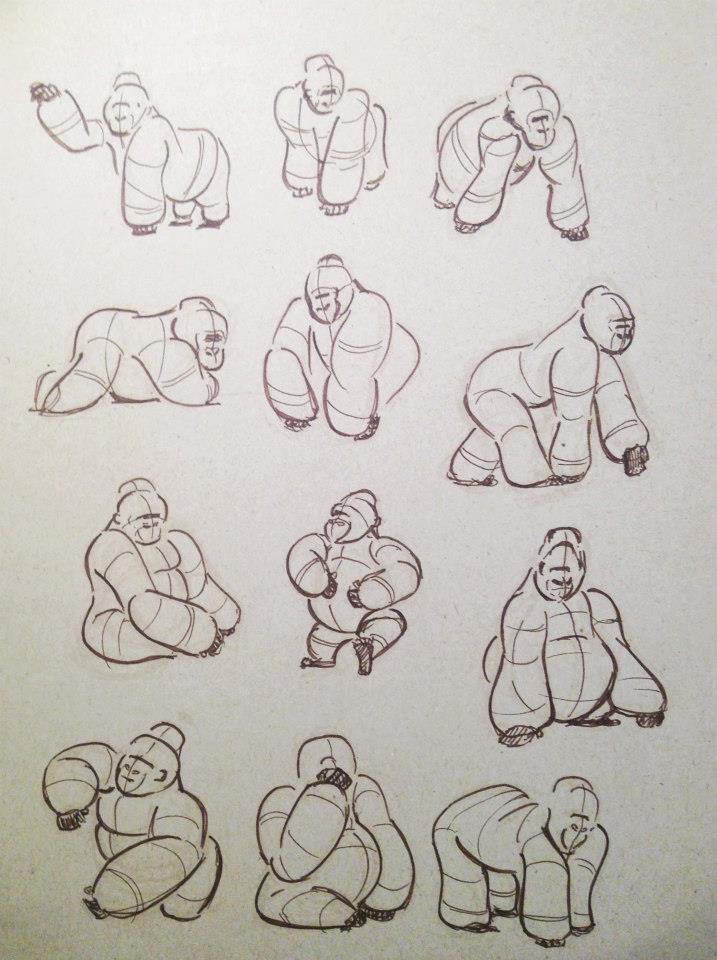
Gorillas are super fun to draw!
5

Bears (and some polar bears)

2

African collection

3

Birds

26

This is me trying to figure out how does animal legs bend…

6

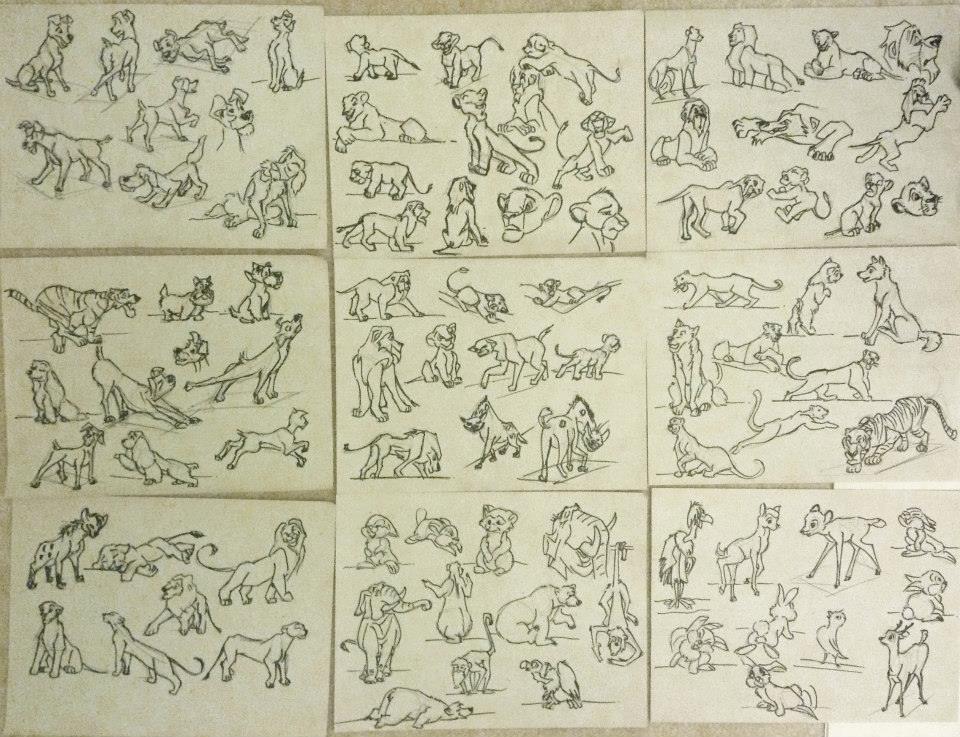
Copied animal poses before the zoo, to get a better idea of how to capture the gesture.

Now onto human figure invention~

7

Those are given a background and invent a character to put into the scene.

8

This was super fun to draw~ I am happy to see that now I can draw figures without finding a photo reference ^^

11

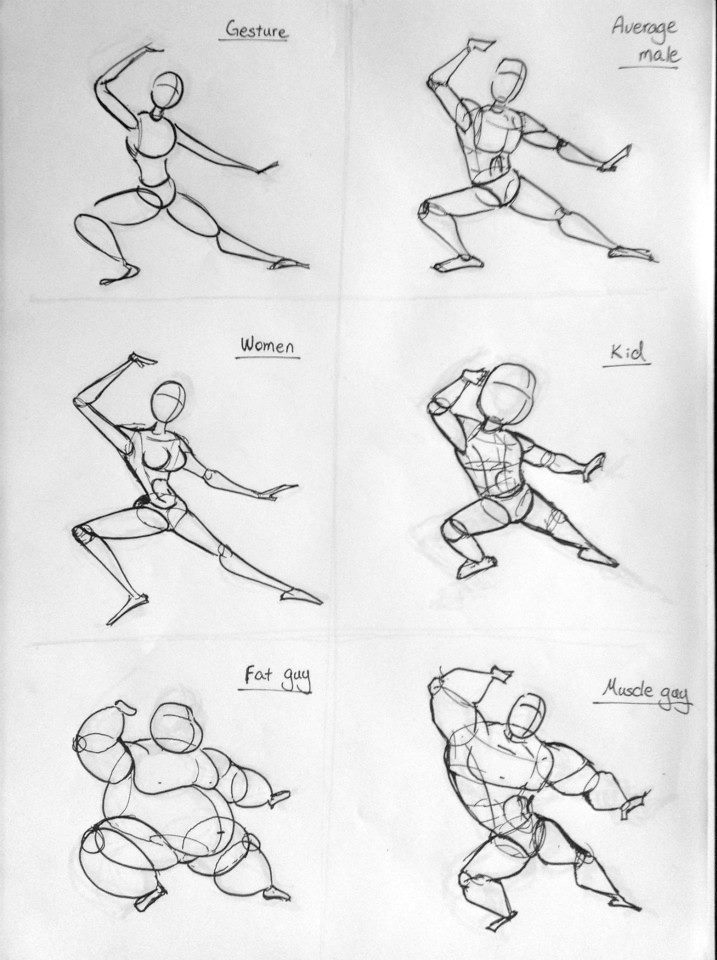
Take a pose and change the character posing. (we actually had a model doing in and was asked to change him into ‘superhero’, ‘sexy women’ etc =P)

1-

I think I really like drawing fat guys…

1817

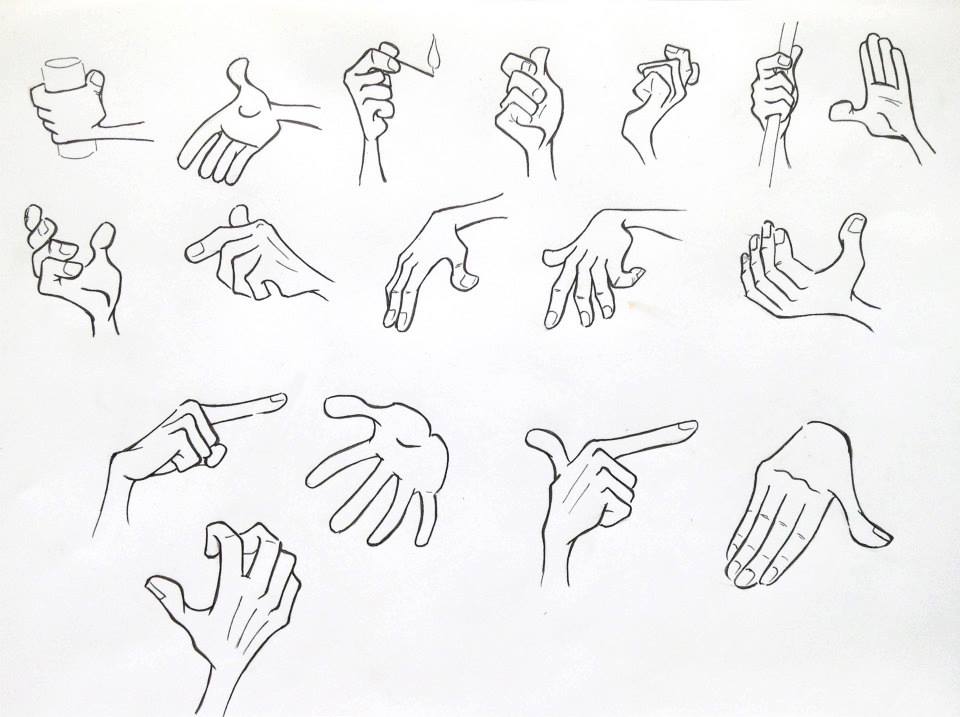
Hand expressions, roughly a half of them copied from master animators from Disney, the other half drawn according to my own (left) hand =P

24

Designing a ‘space pirate’.

Okay, below are some absolutely uncategorized random stuff I just decided to throw in:
1

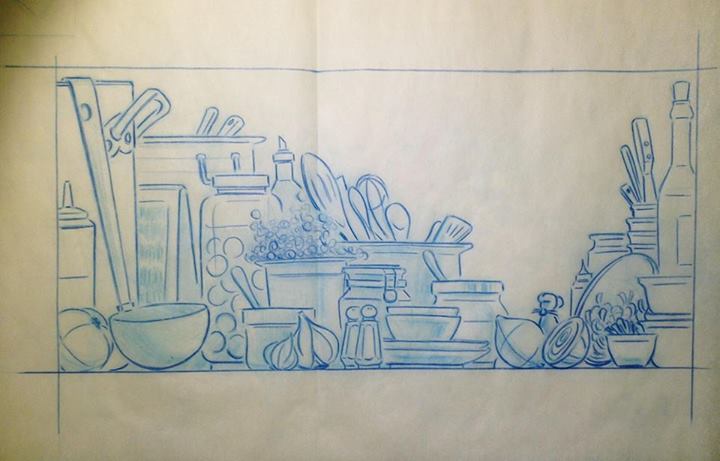
A little layout. (obviously inspired by Ratatouille)

23

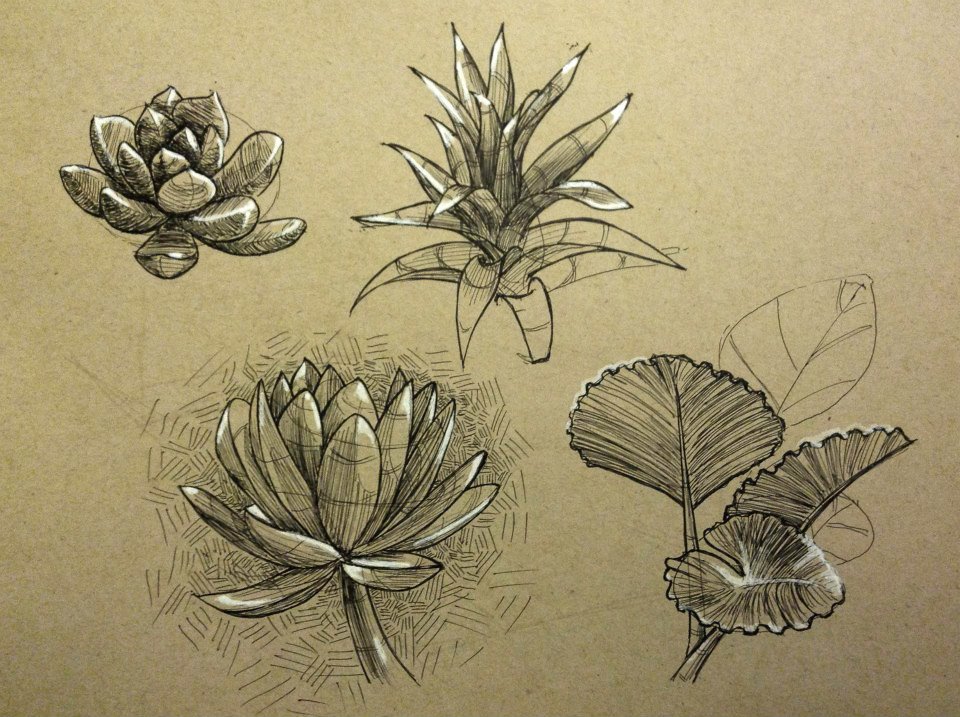
Some plants (drawn on spot in Caltech)

25

Balls, painted in Photoshop

Okay…onto…oil painting! I have to say that I have never done oil in my life…(and I only ever painted a couple times back in high school >.<) But it’s so exciting to start!!!

I started off by going to those life model sessions where there is a model posing and everyone drops in and paints:

13

15

22

14

12

First-time still life.

20
21

Some thumbnail landscapes from my travel photos.

Anyways, painting is something I am most looking forward to improve! Just started to systematically learning it last week, so stay turned!

A sketch of a piece I really wanted to paint once I get better at it:

9

The beginning of a long voyage — from Princeton to Pixar

Dear blog readers:

I am both amazed and touched to see that the blog kept getting traffic long after I stopped using it, hopefully you have found something here interesting or useful. The intension of this post is to announce I decided to start blogging here again. But in a completely different context, to go along with my new life beyond mathematics. Along the way I’d like to give my choice a little explanation (mainly towards my dear mathematical readers) and perhaps give my two cents on life and dreams.

As mentioned in this post 1.5 years ago, I decided to restart my career with the end goal of working at Pixar or Disney as a concept artist.

Definition: Concept art is a form of illustration where the main goal is to convey a visual representation of a design, idea, and/or mood for use in films, video games, animation, or comic books before it is put into the final product.

Roughly speaking, for life action movies one reads the script and selects locations, props and actors; in animation, however, most of the times the world which the story take place doesn’t exist! This means that every single detail needs to be designed from imagination: from a chair, a lamp to whole islands, cities and characters. A concept artist is the person who reads the story and designs the world to stage it!

To illustrate the idea let’s see a couple of examples:

Examples:
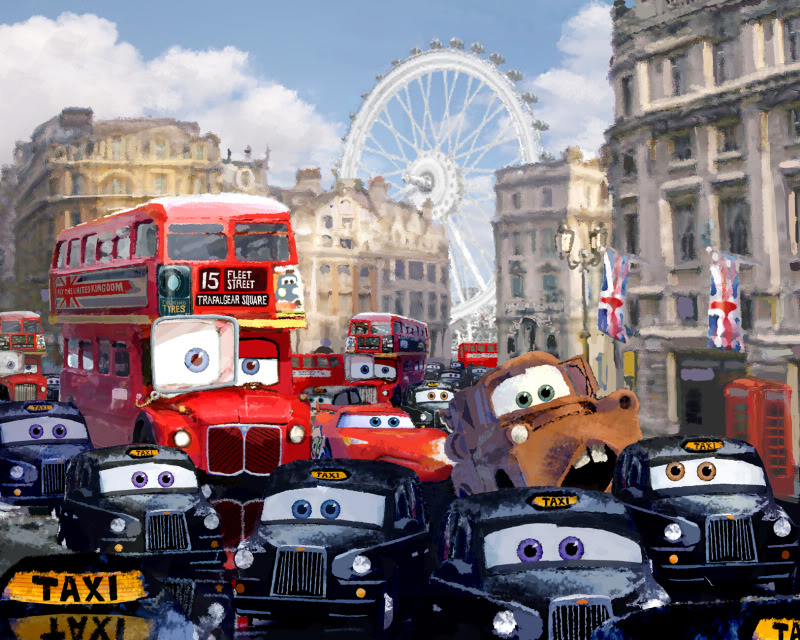
As we know cars (2) was a movie that takes place in an imaginary universe with residents being cars instead of people and animals; Here’s some of Pixar’s brilliant designs:

This was one of the paintings hanging in the palace, note the UK coat of arms logo on the floor~

36

All landmark architectures around the world are re-designed to have car elements in them.

CARS 2

And here’s what a busy London street looks like (I just love the way buses and taxis look so… British! Note that London double deck buses actually have that ‘sigle lens glass’ on them =P)

London_Bus_Scene_SimpleNew

Anyways, hopefully I have given some ideas on what animation concept design is about~ Now onto some properties of a concept designer:

Propositions: A concept artist is typically:
– Super creative
– Has childlike imagination
– Thinks and communicates visually
– Draws and paints well

Hmm…I am totally convinced that this is what I am made for more than anything else! In fact, this is what I wanted way before I got into mathematics, but like many people, childhood dreams sometimes get buried and forgotten in the attic. Luckily I found it back that winter in Disney World and will never, ever, lose it again.

Once I figured out what I wanted the rest is very simple: just do everything possible to get there! In this case I am perhaps at the antiportal point to where I wanted to be: there is just no obvious route from mathematics to animation design, which means I get to create my own path! So I started with making some route maps and took some steps to look into how they work–

Route #1:
Hang around the Princeton computer science department and specialize in computer graphics
–> get a PhD in computer science
–> get into the software research group at Pixar
–> try to get to know people in the art and design group
–> go from there

Current status: So I started by taking graduate computer graphics and algorithms course at Princeton in spring 2012, apparently I’m not bad at them (especially algorithms) and that we Princeton CS department actually has good connections to Pixar. However, after chasing down Tony DeRose in Stony Brook when he was giving a public lecture, I found that unfortunately I do need to first have a PhD in CS and that the software group does not really talk to the design group that much…Hence I estimated this route is not the most efficient.

Route #2:
Get my PhD in mathematics
–> leave academia and work in finance for a few years
–> save enough money
–> go to Art Center, major in entertainment design.
–> graduate and get into Pixar

Current status: The major problem with this plan is of course it involved doing relatively uninteresting and unrelated stuff for a few years. Plus although I’m sure I would have love to attend art school, getting another bachelor’s degree is time consuming. Hence after some research on how I might go about getting a job in finance, I decided to move onto the third plan and perhaps come back to this if nothing seem more efficient.

Route #3: (and this is what I am doing right now!)
Move to California
–> take courses from independent studios (such as concept design academy)
–> become technically at least as good as people who went through art school
–> build a portfolio
–> apply to Pixar directly

Current status: Deep down I have always known this is actually the best and fastest way to go, but I didn’t go for it till this summer because in this case the last six years I spent in mathematics is officially absolutely useless. But now I figured that trying to utilize them would only result in making the process taking longer. Looking into this, the choice is actually very simple: I should have no pity in completely starting over and not look back. ‘Being good at something should only work towards one’s advantage’ sounds like a tautology, but in reality it’s striking to see how often abilities and past accomplishments become burdens that prevents people from chasing dreams and, eventually, prevents them from getting to where they wanted to be.

So here I am in Pasadena since June, I’m thrilled to say that I have never felt more alive since I finished undergrad! Not only that I got to draw and paint all the time, seeing improvements on a daily basis but also I have finally found the group I belong to by being around truly creative people! It will take some time, but I know this is what I want to do and I will get there!

In any case, if Mike Wazowski ended up as a scarer, what am I concerned about? Inspired by the ending of Monsters University, current plan: I’ll work on getting as close as I can to Picar till 2015, if it hasn’t worked out by then I’m going back to Shanghai and start by sweeping the floor at the Shanghai Disneyland.

From now on I will record my progress as an concept artist in training here. Hence if you are here to read mathematics, please unsubscribe…and wish me luck! ^^

With hope, onward
-C

On Tao’s talk and the 3-dimensional Hilbert-Smith conjecture

Last Wednesday Terry Tao briefly dropped by our little town and gave a colloquium. Surprisingly this is only the second time I hear him talking (the first one goes back to undergrad years in Toronto, he talked about arithmetic progressions of primes, unfortunately it came before I learned anything [such as those posts] about Szemeredi’s theorem). Thanks to the existence of blogs, feels like I knew him much better than that!

This time he talked about Hilbert’s 5th problem, Gromov’s polynomial growth theorem for discrete groups and their (Breuillard-Green-Tao) recently proved more general analogy of Gromov’s theorem for approximate groups. Since there’s no point for me to write 2nd-handed blog post while people can just read his own posts on this, I’ll just record a few points I personally found interesting (as a complete outsider) and moving on to state the more general Hilbert-Smith conjecture, very recently solved for 3-manifolds by John Pardon (who now graduated from Princeton and became a 1-st year grad student at Stanford, also appeared in this earlier post when he gave solution to Gromov’s knot distortion problem).

Warning: As many of you know I never take notes during talks, hence this is almost purely based on my vague recollection of a talk half a week ago, inaccuracy and mistakes are more than possible.

All topological groups in this post are locally compact.

Let’s get to math~ As we all know, a Lie group is a smooth manifold with a group structure where the multiplication and inversion are smooth self-diffeomorphisms. i.e. the object has:

1. a topological structure
2. a smooth structure
3. a group structure

It’s not too hard to observe that given a Lie group, if we ‘forget’ the smooth structure and just see it as a topological group which is a (topological) manifold, then we can uniquely re-construct the smooth structure from the group structure. From my understanding, this is mainly because given any element in the topological group we can find a unique homomorphism of the group \mathbb{R} into the manifold, sending 0 to identity and 1 to the element. resulting a class of curved through the identity, a.k.a the tangent space. Since the smooth structure is determined by the tangent space of the identity, all we need to know is how to ‘multiply’ two such parametrized curves.

The way to do that is to ‘zig-zag’:

Pick a small \varepsilon, take the image of \varepsilon under the two homomorphisms, alternatingly multiplying them to obtain a sequence of points in the topological group. As \varepsilon \rightarrow 0 the sequence becomes denser and converges to a curve.

The above shows that given a Lie group to start with, the smooth structure is uniquely determined by the topological group structure. Knowing this leads to the natural question:

Hilbert’s fifth problem: Is it true that any topological group which are (topological) manifolds admits a smooth structure compatible with group operations?

Side note: I had a little post-colloquium discussion with our fellow grad student Sam Lewallen, he asked:

Question: Is it possible for the same topological manifold to have two different Lie group structures where the induced smooth structures are different?

Note that neither the above nor Hilbert’s fifth problem shows such thing is impossible, since they both start with the phase ‘given a topological group’. My *guess* is this should be possible (so please let me know if you know the answer!) The first attempt might be trying to generate an exotic \mathbb{R}^4 from Lie group. Since the 3-dimensional Heisenberg group induces the standard (and unique) smooth structure on \mathbb{R}^3, I guess the 4-dimensional Heisenberg group won’t be exotic.

Anyways, so the Hilbert 5th problem was famously solved in the 50s by Montgomery-Zippin and Gleason, using set-theoretical methods (i.e. ultrafilters).

Gromov comes in later on and made the brilliant connection between (infinite) discrete groups and Lie groups. i.e. one see a discrete group as a metric space with word metric, ‘zoom out’ the space and produce a sequence of metric spaces, take the limit (Gromov-Hausdorff limit) and obtain a ‘continuous’ space. (which is ‘almost’ a Lie group in the sense that it’s an inverse limit of Lie groups.)

Hence he was able to adapt the machinery of Montgomery-Zippin to prove things about discrete groups:

Theorem: (Gromov) Any group with polynomial growth is virtually nilpotent.

Side note: I learned about this through the very detailed and well-presented course by Dave Gabai. (I thought I must have blogged about this, turns out I haven’t…)

The beauty of the theorem is (in my opinion) that we are given any discrete group, and all that’s known is how large the balls are (in fact, not even that, we know how large the large balls grow), yet the conclusion is all about the algebraic structure of the group. To learn more about Gromov’s work, see his paper. Although unrelated to the rest of this post, I shall also mention Bruce Kleiner’s paper where he proved Gromov’s theorem without using Hilbert’s 5th problem, instead he used space of harmonic maps on graphs.

Now we finally comes to a point of briefly mentioning the work of Tao et.al.! So they adopted Gromov’s methods of limiting and ‘ultra-filtering’ to apply to stuff that’s not even a whole discrete group: Since Gromov’s technique was to take the limit of a sequence of metric spaces which are zoomed out versions of balls in a group, but the Gromov-Hausdorff limit actually doesn’t care about the fact that those spaces are zoomed out from the same group, they may as well be just a family of subsets of groups with ‘bounded geometry’ of a certain kind.

Definition: An K-approximate group S is a (finite) subset of a group G where S\cdot S = \{ s_1 s_2 \ | \ s_1, s_2 \in S \} can be covered by K translates of S. i.e. there exists p_1, \cdots, p_K \in G where S \cdot S \subseteq \cup_{i=1}^k p_i \cdot S.

We shall be particularly interested in sequence of larger and larger sets (in cardinality) that are K-approximate groups with fixed K.

Examples:
Intervals [-N, N] \subseteq \mathbb{Z} are 2-approximate groups.

Balls of arbitrarily large radius in \mathbb{Z}^n are C \times 2^n approximate groups.

Balls of arbitrarily large radius in the 3-dimensional Heisenberg group are C \times 2^4 approximate groups. (For more about metric space properties of the Heisenberg group, see this post)

Just as in Gromov’s theorem, they started with any approximate group (a special case being sequence of balls in a group of polynomial growth), and concluded that they are in fact always essentially balls in Nilpotent groups. More precisely:

Theorem: (Breuillard-Green-Tao) Any K-approximate group S in G is covered by C(K) many translates of subgroup G_0 < G where G_0 has a finite (depending only on K) index nilpotent normal subgroup N.

With this theorem they were able to re-prove (see p71 of their paper) Cheeger-Colding’s result that

Theorem: Any closed n dimensional manifold with diameter 1 and Ricci curvature bounded below by a small negative number depending on n must have virtually nilpotent fundamental group.

Where Gromov’s theorem yields the same conclusion only for non-negative Ricci curvature.

Random thoughts:

1. Can Kleiner’s property T and harmonic maps machinery also be used to prove things about approximate groups?

2. The covering definition as we gave above in fact does not require approximate group S to be finite. Is there a Lie group version of the approximate groups? (i.e. we may take compact subsets of a Lie group where the self-product can be covered by K many translates of the set.) I wonder what conclusions can we expect for a family of non-discrete approximate groups.

As promised, I shall say a few words about the Hilbert-Smith conjecture and drop a note on the recent proof of it’s 3-dimensional case by Pardon.

From the solution of Hilbert’s fifth problem we know that any topological group that is a n-manifold is automatically equipped with a smooth structure compatible with group operations. What if we don’t know it’s a manifold? Well, of course then they don’t have to be a Lie group, for example the p-adic integer group \mathbb{Z}_p is homeomorphic to a Cantor set hence is not a Lie group. Hence it makes more sense to ask:

Hilbert-Smith conjecture: Any topological group acting faithfully on a connected n-manifold is a Lie group.

Recall an action is faithful if the homomorphism \varphi: G \rightarrow homeo(M) is injective.

As mentioned in Tao’s post, in fact \mathbb{Z}_p is the only possible bad case! i.e. it is sufficient to prove

Conjecture: \mathbb{Z}_p cannot act faithfully on a finite dimensional connected manifold.

The exciting new result of Pardon is that by adapting 3-manifold techniques (finding incompressible surfaces and induce homomorphism to mapping class groups) he was able to show:

Theorem: (Pardon ’12) There is no faithful action of \mathbb{Z}_p on any connected 3-manifolds.

And hence induce the Hilbert-Smith conjecture for dimension 3.

Discovering this result a few days ago has been quite exciting, I would hope to find time reading and blogging about that in more detail soon.

A train track on twice punctured torus

This is a non-technical post about how I started off trying to prove a lemma and ended up painting this:

One of my favorite books of all time is Thurston‘s ‘Geometry and Topology of 3-manifolds‘ (and I just can’t resist to add here, Thurston, who happen to be my academic grandfather, is in my taste simply the coolest mathematician on earth!) Anyways, for those of you who aren’t topologists, the book is online and I have also blogged about bits and parts of it in some old posts such as this one.

I still vividly remember the time I got my hands on that book for the first time (in fact I had the rare privilege of reading it from an original physical copy of this never-actually-published book, it was a copy on Amie‘s bookshelf, which she ‘robbed’ from Benson Farb, who got it from being a student of Thurston’s here at Princeton years ago). Anyways, the book was darn exciting and inspiring; not only in its wonderful rich mathematical content but also in its humorous, unserious attitude — the book is, in my opinion, not an general-audience expository book, but yet it reads as if one is playing around just to find out how things work, much like what kids do.

To give a taste of what I’m talking about, one of the tiny details which totally caught my heart is this page (I can’t help smiling each time when flipping through the book and seeing the page, and oh it still haunts me >.<):

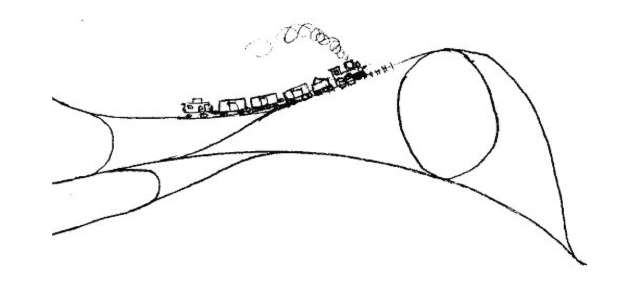
This was from the chapter about Kleinian groups, when the term ‘train-track’ was first defined, he drew this image of a train(!) on moving on the train tracks, even have smoke steaming out of the engine:

To me such things are simply hilarious (in the most delightful way).

Many years passed and I actually got a bit more into this lamination and train track business. When Dave asked me to ‘draw your favorite maximal train track and test your tube lemma for non-uniquely ergodic laminations’ last week, I ended up drawing:

Here it is, a picture of my favorite maximal train track, on the twice punctured torus~! (Click for larger image)

Indeed, the train is coming with steam~

Since we are at it, let me say a few words about what train tracks are and what they are good for:

A train track (on a surface) is, just as one might expect, a bunch of branches (line segments) with ‘switches’, i.e. whenever multiple branches meet, they must all be tangent at the intersecting point, with at least one branch in each of the two directions. By slightly moving the switches along the track it’s easy to see that generic train track has only switches with one branch on one side and two branches on the other.

On a hyperbolic surface S_{g,p}, a train track is maximal if its completementry region is a disjoint union of triangles and once punctured monogons. i.e. if we try to add more branches to a maximal track, the new branch will be redundant in the sense that it’s merely a translate of some existing branch.

As briefly mentioned in this post, train tracks give natural coordinate system for laminations just like counting how many times a closed geodesic intersect a pair of pants decomposition. To be slightly more precise, any lamination can be pushed into some maximal train track (although not unique), once it’s in the track, any laminations that’s Hausdorff close to it can be pushed into the same track. Hence given a maximal train track, the set of all measured laminations carried by the train track form an open set in the lamination space, (with some work) we can see that as measured lamination they are uniquely determined by the transversal measure at each branch of the track. Hence giving a coordinate system on \mathcal{ML})(S).

Different maximal tracks are of course them pasted together along non-maximal tracks which parametrize a subspace of \mathcal{ML}(S) of lower dimension.

To know more about train tracks and laminations, I highly recommend going through the second part of Chapter 8 of Thurston’s book. I also mentioned them for giving coordinate system on the measured lamination space in the last post.

In any case I shall stop getting into the topology now, otherwise it may seem like the post is here to give exposition to the subject while it’s actually here to remind myself of never losing the Thurston type childlike wonder and imagination (which I found strikingly larking in contemporary practice of mathematics).